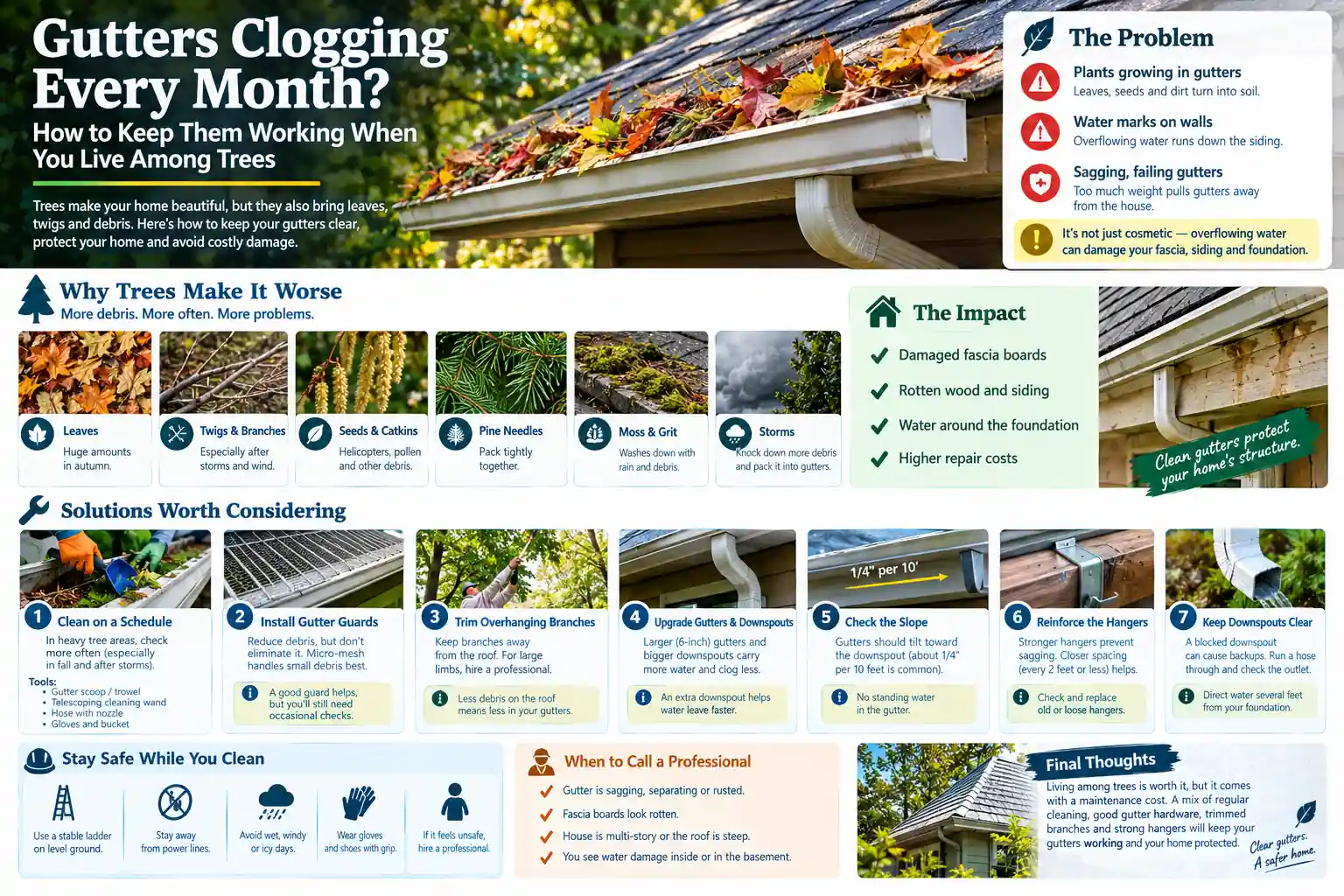
Gutters Clogging Every Month? How to Keep Them Working When You Live Among Trees
I live in an area in America with a lot of trees and a lot of weather. People hear that and say, “What’s wrong with living among trees?” And honestly, nothing is wrong with it. It’s beautiful. But there is one reality that comes with it, and it has become one of the biggest recurring problems around my house: clogged gutters.
Normally, cleaning your gutters twice a year is enough. In my case, there were times when I had to clean them once a month. If you live somewhere with heavy tree cover and frequent storms, you may know exactly what I mean.
In this article I’ll explain what happens when gutters clog, why it gets worse around trees, and the solutions worth considering if you are in the same situation.
What Happens When Gutters Aren’t Cleaned
If I don’t clean my gutters, the signs show up quickly:
- Plants growing out of the gutters. Leaves, seeds and dirt pile up and turn into soil. Before long, something green is growing where rainwater should flow.
- Water marks on the walls. When gutters overflow, water runs down the siding instead of going through the downspout, leaving streaks and stains.
- Sagging, failing gutters. The worst outcome is a gutter so full and heavy that it pulls away, sags and stops doing its job completely.
These aren’t just cosmetic problems. Overflowing water can reach the fascia boards under the roof edge, the siding, and the ground around the foundation. A gutter that has stopped working lets water go wherever it wants.
Why Trees Make It So Much Worse
Trees drop far more than leaves. Depending on the season, gutters can collect:
- Leaves, in huge quantities in autumn
- Twigs and small branches, especially after storms and wind
- Seeds, helicopters, catkins and pollen
- Needles from evergreens, which pack tightly together
- Moss and roof grit that wash down along with it
In places with frequent weather events, storms knock down even more debris, and heavy rain packs it into a dense, wet layer that doesn’t drain. That’s how a gutter that would be fine twice a year ends up needing attention every month.
Solutions Worth Considering
There is no single magic fix, but combining a few of these makes a real difference.
1. Clean on a Schedule That Matches Your Trees
Two cleanings a year is the general rule, but heavy tree cover changes the math. In the peak seasons (late fall, and after big storms), check more often. A quick look from a ladder takes minutes and prevents most of the damage.
Tools that make frequent cleaning easier:
- A gutter scoop or small trowel
- A telescoping gutter-cleaning wand
- A hose with an adjustable nozzle
- Gloves and a bucket you can hang on the ladder
2. Install Gutter Guards, and Pick the Right Type
Gutter guards stop most leaves from getting in. Types include screens, mesh, micro-mesh and reverse-curve covers. A few honest points:
- They reduce cleaning, but they don’t eliminate it. Fine debris, seeds and pine needles can still build up on or under them.
- Fine micro-mesh handles small debris better than large-hole screens.
- Poorly installed guards can make things worse, for example by lifting shingles or trapping debris on top.
They are worth considering in heavily wooded areas, but expect to still check them regularly.
3. Trim Branches Over the Roof
The less that falls on the roof, the less ends up in the gutters. Trim branches that hang over the roof or touch it. Small branches are easy to handle, but for large limbs or tall trees, hire a qualified tree service. Cutting big branches near the house is dangerous.
4. Upgrade to Larger Gutters and Downspouts
Many houses have standard 5-inch gutters. In areas with lots of debris and heavy rain, larger 6-inch gutters and bigger downspouts carry more water and clog less easily. Adding an extra downspout also helps water leave faster, so debris is less likely to settle.
5. Check the Slope
Gutters should tilt slightly toward the downspout (about a quarter inch for every ten feet is a common guideline). If water is standing in the gutter after rain, the slope may be off, and debris will collect in those spots.
6. Reinforce the Hangers
A gutter full of wet leaves is heavy. If the hangers are old, spaced too far apart, or loose, the gutter sags or pulls away from the house. Check the hangers when you clean, and add or replace them where needed. Closer spacing, around every two feet or less, gives a lot more support, especially in areas with heavy rain.
7. Keep the Downspouts Clear
Most people clean the gutter and forget the downspout. If water backs up at the opening, the downspout is blocked. Run a hose through it, and make sure it discharges at least several feet from the foundation.
Stay Safe While You Clean
Frequent cleaning means frequent ladder time, and that raises the risk.
- Set the ladder on firm, level ground, and use a stabilizer if you have one.
- Keep your body between the rails, and move the ladder rather than leaning sideways.
- Stay far from power lines.
- Don’t climb on wet, windy or icy days.
- Wear gloves and good shoes with grip.
- If your house is tall or the work feels unsafe, hire a professional.
When to Call a Professional
- The gutter is sagging badly, separating from the house, or rusted through
- The fascia boards behind it look rotten
- The house is multi-story or the roof is steep
- You see water damage inside the house or in the basement
Final Thoughts
Living among trees is worth it, but it comes with a maintenance cost. Clogged gutters are the biggest one for me, and ignoring them leads to stains, plants, sagging gutters and bigger repairs later. The best defense is a mix of regular cleaning, good gutter hardware, trimmed branches and strong hangers.